
What the supplier says
Almost done.
A reply is a starting point. We check the details.
For U.S. importers
Sourcing support in China and Taiwan
We check suppliers, keep tabs on production, and inspect goods before they ship. You get clear updates, photos, and the next steps.
A quick note is fine. Start with a supplier, an order, or a problem you need checked.
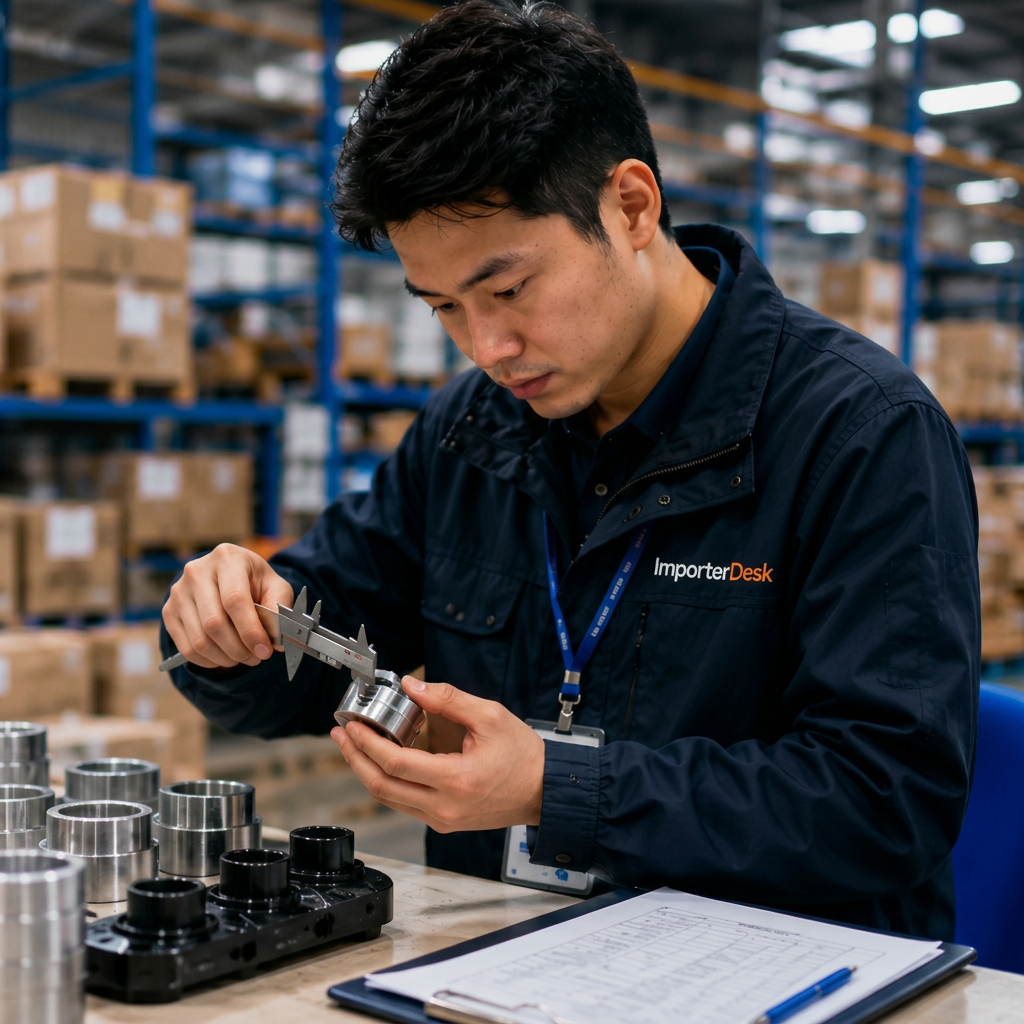
See the marked photo, confirm the change, and we’ll schedule a recheck.
A quick “almost done” can leave a lot unanswered. We check the production floor, materials, and loading records, then give your team a clear next step.
Almost done.
A reply is a starting point. We check the details.
Two production steps are still unfinished. Some materials haven’t arrived.
Reset the timeline and follow up on the missing materials.
Ask for revised completion dates and agree on the next update.
Illustrative sourcing scenarios. Checks and recommendations depend on your product and the scope agreed with your team.
You don’t need to sort through every service. Pick the situation closest to yours. We’ll show you what to check first and what can wait.
Before your team commits, check the factory, the sample, and the terms you’re relying on.
Not sure where to start? Tell us what you’re working on.
SOURCING BLIND SPOTS
Before you agree to a price, place an order, or approve a shipment, make sure you know what’s actually happening.
RISK 01
A good-looking website and quick replies don’t tell you who will make your order. Find out which factory will do the work and whether any of it will be sent elsewhere.
Know who’s making your order—and where.
A company website, factory photos, and quick replies.
The company behind the quote, the factory location, the equipment, and any work sent to another factory.
Where we step in
From checking a supplier to following up on production, we help you get clear answers and keep a record of what you and the supplier agreed to.

Before you commit
We check who’s behind the quote, where the work will be done, and whether the factory can make what you need.

Before you order
We review materials, quantities, packaging, payment terms, and costs that may be missing from the quote.

During production
We follow up on samples, materials, production, and inspection, so you can see what’s finished and what still needs attention.

For your next order
We organize the approved specifications, inspection results, and follow-up notes so your next order starts with a clear record.
Two ways to follow up on an order
A price, a progress update, and a few photos can leave a lot unanswered. Here’s what we check along the way.
Before you order
During production
Before shipment
Going by updates alone
You have a price, but haven’t checked who will make the order or what the price includes.
You don’t know which version is being made, what’s finished, or what’s holding things up.
Photos alone may not show whether the order meets the agreed requirements.
Checking the details
We check the supplier, what the factory can make, and what the quote includes.
We follow up on the approved sample, materials, completed quantities, and any open issues.
We check inspection results, packaging, labels, and supplier documents against the requirements you agreed to.
Before you order
You have a price, but haven’t checked who will make the order or what the price includes.
We check the supplier, what the factory can make, and what the quote includes.
During production
You don’t know which version is being made, what’s finished, or what’s holding things up.
We follow up on the approved sample, materials, completed quantities, and any open issues.
Before shipment
Photos alone may not show whether the order meets the agreed requirements.
We check inspection results, packaging, labels, and supplier documents against the requirements you agreed to.
What this means for your order
Going by updates alone
Less time to clarify the details, fix problems, or adjust the plan.
Checking the details
See what’s confirmed, what still needs work, and what the records show.
Keep your team focused on the business. We follow up with suppliers in China and Taiwan, coordinate the agreed work, and report what’s confirmed, what needs attention, and what comes next.

We clarify the tasks, expected updates, and points that need your approval.
We separate supplier statements from checked findings and flag what still needs a closer look.
We bring findings and options back to you before moving ahead with work that requires your approval.
We support your team’s sourcing work in China and Taiwan—from finding suppliers and coordinating samples to production follow-up, inspections, and shipment handoffs. The tasks and reporting are agreed before work begins.

Identify potential suppliers and check their background, capabilities, and fit for your requirements.
Coordinate samples, specifications, revisions, and commercial terms for your team’s review.
Track agreed milestones, flag production issues, and check goods against the approved requirements.
Coordinate the agreed loading checks, shipping documents, payment milestones, and other project tasks.
Your team keeps supplier selection and commercial approval. Legal advice, customs filings, and other regulated work remain with the appropriately authorized professionals.
Reports & deliverables
Get findings, supporting photos, and open actions in one clear record—so your team can review the work and decide what happens next.
The report follows the scope agreed with your team.
From the check to your next step
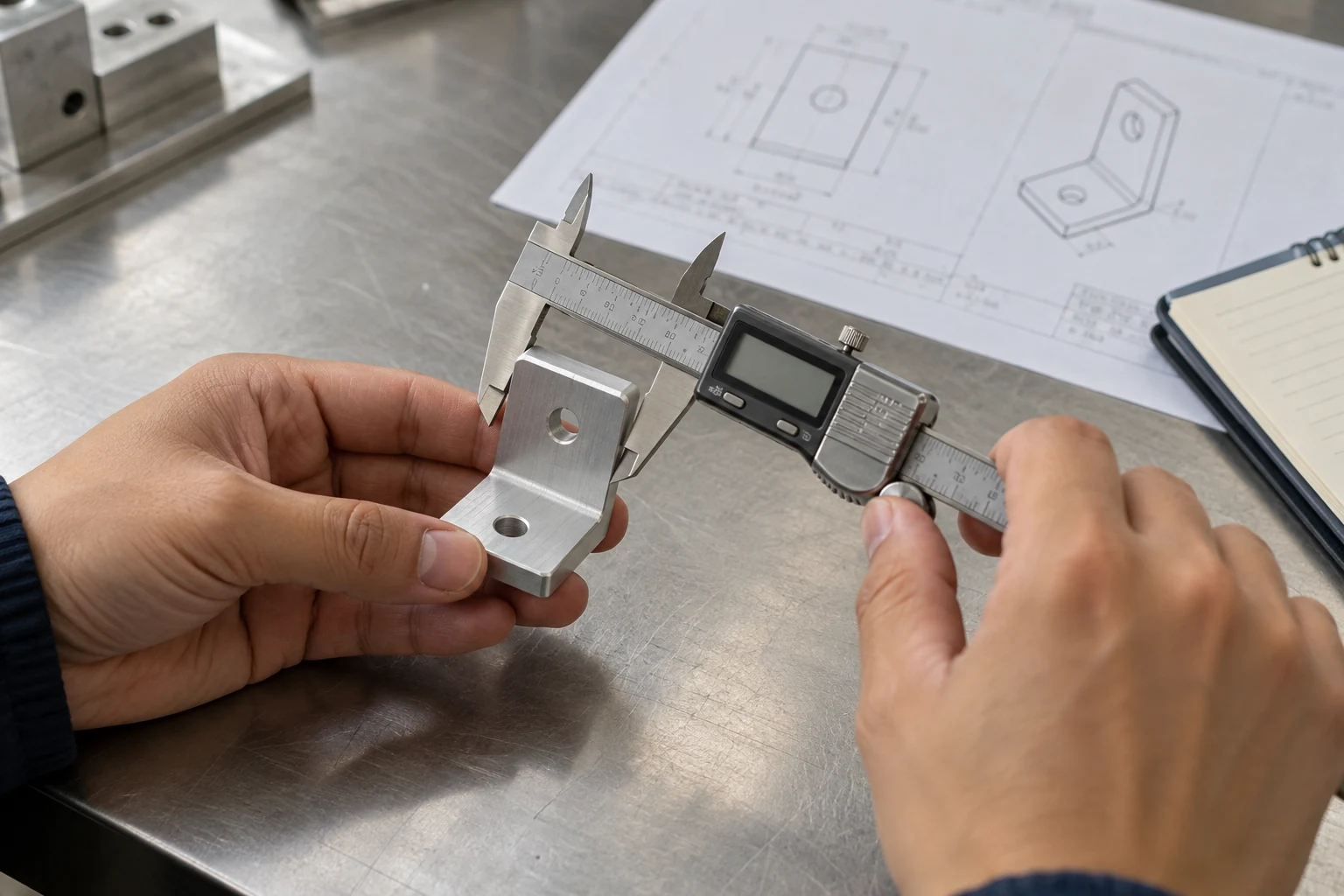 Sample compared with the reference
01 Reference
Approved drawing and sample
02 Supporting evidence
Photo + measurement record
Method and reference kept together
03 Buyer decision
Review open questions
Your team approves the next action
One connected record. A clearer next step.
The reference and agreed checks.
Photos, observations, and methods.
Open questions and the next action.
We do not wait for factories to reply and forward it to you. We break the buy into checkpoints that can be confirmed, tracked and reported, so issues surface before they grow.
Confirm scope, develop suppliers, verify identity, ownership and operational risk.
Unpack quote structure, payment terms, sample versions and mass-production feasibility.
Track scheduling, materials, factory visits, first-article, exceptions and lead-time shifts.
Pre-shipment inspection, container loading verification, documents and logistics handover.
We stack public data, curated databases, supply-chain leads and on-the-ground experience side by side — so U.S. importers can see where the market is likely moving before they even start asking for quotes.
The point is not more data — it's turning scattered signals into a sourcing direction you can actually decide on.
From public filings, curated databases and supply-chain leads, we watch where U.S. buyers in your category are actually sourcing and which alternative origins are heating up.
Track raw material, origin, capacity and supply-chain moves as reference for negotiation, safety-stock and alternative supplier evaluation.
We consolidate market watch, quote samples and on-the-ground experience to tell whether a quote is reasonable, so extreme-low and extreme-high offers don’t mislead you.
This isn't a data warehouse or a financial dashboard. It's a market-signal entry point that shows we don't just quote — we help you read the whole sourcing landscape.
Data is reference for sourcing decisions only; live engagements always rely on supplier vetting, quote terms, contract clauses and on-site confirmation.
Our direct sourcing and execution coverage is centered in China and Taiwan. We help buyers compare supplier capability, production fit, quality controls, commercial terms, logistics, and documentation requirements before selecting a sourcing location. Country selection is a project decision — not a shortcut based on labor rates or a single tariff label.
Broad supplier depth and manufacturing options across multiple industrial clusters.
China can offer broad supplier choice, mature component ecosystems, tooling capacity, and multiple cost or production configurations within the same category.
Engineering-led manufacturing and supplier coordination for specification-sensitive projects.
Taiwan can be a strong fit when engineering communication, process discipline, smaller specialist suppliers, technical documentation, or supply-chain diversification are important to the project.
For sourcing outside China and Taiwan, we first confirm product fit, local supplier access, field-execution capability, reporting standards, partner responsibilities, and the importer's compliance requirements. We only present a location as an active option after the execution model has been defined for that project.
Bring your product, target cost, current supplier, quality requirements, and known tariff or origin assumptions. We'll help identify which sourcing questions must be resolved before comparing locations.
Category examples describe common project patterns, not guaranteed supplier availability or country-wide capability. Actual sourcing fit depends on product specifications, quantities, tooling, materials, supplier capacity, upstream origin, quality requirements, logistics, trade measures, and the approved execution scope. Tariff and origin treatment must be confirmed using the exact product and transaction facts with the importer's licensed customs broker or trade adviser.
ImporterDesk organizes selected public updates from official sources into project-specific review questions. Each relevant signal should retain its source, publication or effective date, affected facts, evidence status, action owner, and professional-review handoff. A general update is not presented as a final legal, customs, sanctions, product-admissibility, or regulatory conclusion.
Relevant changes involving the HTSUS, Chapter 99, Section 301, Section 232, exclusions, quotas, antidumping or countervailing-duty questions, and other product-specific trade measures identified within the approved scope.
ImporterDesk may organize the available product and transaction information but does not make the importer’s final classification, valuation, origin, duty, exclusion, quota, antidumping, countervailing-duty, or entry determination.
These statuses indicate what the project team must do next. They do not represent a legal conclusion, official enforcement status, or guaranteed level of exposure.
The update is recorded, but no current project match has been identified.
A potential match exists, but product, supplier, party, or transaction facts remain incomplete.
A project owner must obtain evidence, correct a record, change an instruction, or make a decision before the next commitment.
The issue requires the importer’s licensed customs broker, legal counsel, sanctions specialist, laboratory, bank, certification body, or other authorized provider.
Shows representative signal categories and review logic. It is not a complete or continuously updated list of legal or regulatory changes.
Uses the approved product, supplier, party, transaction, milestone, and service-provider information available for the engagement to identify relevant review questions and owners.
The importer and its authorized professional providers retain the legal, customs, sanctions, regulatory, testing, banking, and shipment determinations assigned to them.
Share the product, current HTS assumption, country and supplier information, upstream questions, shipment stage, and professional providers already involved. We will identify which public signals and project changes require a documented review path.
The Risk Signal Review is an information-organization and project-coordination function. Public sources may change, be corrected, become effective at different times, or require interpretation using product- and transaction-specific facts. Coverage, update frequency, source availability, matching logic, and notification timing depend on the approved service scope. ImporterDesk does not provide legal advice, guarantee continuous or complete monitoring, determine final compliance or admissibility, or replace the importer\u2019s licensed customs broker, legal counsel, sanctions provider, laboratory, certification body, bank, carrier, or government authority.
U.S. import clearance involves multiple checkpoints and parties. This matrix shows what we coordinate, what you receive, and where risks commonly appear at each stage.
Actual filing responsibilities, deadlines, and release timing depend on the entry type, commodity, agency requirements, and the importer's authorized filer. The Importer of Record remains responsible for compliance.
Before goods leave the factory, we run pre-shipment inspection, defect classification, disposition, and release recommendations with your team. The point isn't more photos — it's giving every final payment a report you can point to.
Catch defects early
See problems while goods are still at the plant — not after they clear customs.
Classify severity
Critical, major, and minor defects handled with different playbooks.
Balance-payment basis
Release the final payment against a report, not a supplier promise.

Photos, video, and close-ups so buyers do not just receive a verdict — they see where the issue is.
Location, severity, and recommended action documented — no more "everything is fine" from the factory.
Inspection findings become shipment decisions — payment, rework, hold, or delay, each with a basis.
Checklist items, defect callouts, batch records, and sign-off summary kept for future review or dispute.
Each gate has a clear owner, target timing, approval point, and documented output. The four evidence packs connect product requirements, quality decisions, shipment data, and broker-ready records.
Capture product scope, target landed cost, compliance exposure, and buyer decision rules before any supplier work starts.
HTSUS / PGA flags identified early so FDA, EPA, FCC, CPSIA, or textile controls are not discovered after production.
In progress: We pressure-test the request against HTSUS, PGA jurisdiction (FDA / EPA / FCC / CPSC), and your target landed cost — before a single supplier email goes out.
You sign off on scope + compliance lane → we move to Gate 02 PO + spec lock.
No brief = sampling solves the wrong U.S. import problem.
Timing ranges are planning estimates, not guaranteed lead times. Actual timing depends on product complexity, supplier readiness, testing requirements, regulatory scope, transport mode, and booking availability. Filing responsibilities remain with the importer and its authorized filer unless otherwise agreed in writing.
Quality control begins before an inspector arrives at the factory. The product reference, inspection scope, sampling or test method, defect classifications, acceptance rules, escalation thresholds, and decision owner must be defined first. ImporterDesk coordinates the approved field activity and evidence; the buyer retains authority over quality disposition and shipment release.
Before field activity is scheduled, the project identifies the current product reference, documents available for inspection, checks that must be performed, items outside the inspection scope, and the rules used to report and escalate findings.
Approved sample, first article, drawing, specification, bill of materials, packaging reference, or another buyer-approved baseline.
The product characteristics, quantities, packaging, labeling, documents, production stages, and shipment conditions included in the assignment.
Safety, function, fit, appearance, dimensions, material, workmanship, packaging, or other characteristics identified by the buyer as decision-critical.
The buyer-approved sample selection, inspection level, acceptance-sampling plan, test procedure, measurement method, or full-inspection requirement.
The agreed definitions for critical, major, minor, or project-specific nonconformities.
The conditions requiring immediate escalation, corrective action, reinspection, hold, or buyer disposition.
The buyer representative authorized to accept, hold, rework, reinspect, reject, accept unresolved risk, or release the shipment.
Confirm that the supplier and buyer are working from the same approved product, material, packaging, labeling, process, and quality-control baseline before normal production begins.
Production-readiness record with confirmed items, unresolved gaps, owners, and required buyer decisions.
Where the buyer approves attribute acceptance sampling, the inspection record identifies the applicable standard or buyer-defined plan, lot size, inspection level, sample size, defect classifications, AQL values, and acceptance or rejection numbers used.
Each section prevents an inspection conclusion from being separated from the baseline, method, evidence, unresolved issues, and final disposition.
Approved checklist, product reference, document versions, inspection location, date, and items outside scope.
Order quantity, presented quantity, completion status, packing status, and lot identification available during inspection.
Sample-selection method, sample size, inspection level, equipment, test procedures, and limitations.
Results by characteristic, measurement, test, packaging check, document check, or other approved inspection item.
Defect classification, count, affected sample, description, photographs, measurements, and evidence references.
Checks not performed, unavailable documents, inaccessible areas, incomplete production, equipment limitations, or supplier restrictions.
Supplier response, proposed correction, affected quantity, action owner, target date, and reinspection requirement.
Conforms within inspected scope, does not conform, hold pending correction, reinspection recommended, or evidence incomplete — followed by the buyer's disposition.
Share the product reference, order status, quality concerns, available specifications, required checks, shipment timing, and decision your team needs to make. We will identify the inspection scope and approval rules that must be defined before field execution.
Inspection results are limited to the approved scope, product state, sample selected, documents available, factory access, timing, equipment, test method, and observable conditions during the assignment. Inspection, sampling, follow-up, or loading supervision does not guarantee that every unit conforms, that all defects will be detected, that the supplier will complete corrective action, that delivery timing will be met, or that the product will receive regulatory acceptance. The buyer retains responsibility for quality disposition, unresolved-risk acceptance, payment, and shipment-release decisions.
Five quick questions across audit, payment, sample sign-off, inspection, and order tracking — see the risk first, then decide which checkpoint to reinforce.
Buyers see the gaps in their own sourcing process before anyone recommends a service.
A/B/C tiers say plainly whether the process is healthy, partly exposed, or high risk.
The result explains why buyers need a fixed point of contact, on-site verification, and issue escalation.
This score is directional. Actual recommendations come from an ImporterDesk consultant, tuned to your order size, product category, and supplier situation.
When sourcing, quoting, vetting, PSI, follow-up and shipping become recurring work, we turn scattered tasks into a trackable, budgetable, compounding procurement flow — one monthly retainer, one point of contact.
Suppliers, POs and progress tracked on one cadence — no more re-briefing every time.
Factory audits, PSI, on-site checks and visits planned by task type and region — with predictable coverage.
Quotes, vetting, sealed samples, PSI reports and exception logs stack into your own institutional memory.
Payment terms, CBP entry docs, factory audit playbooks and UFLPA due-diligence — mined from real mistakes and cases into a reusable knowledge base for US importers.
Late filing, wrong manufacturer, unlinked bill of lading — the misses that turn a routine ocean import into a demurrage bill.
Who qualifies, what to document, and how substitution vs. direct-ID drawback change your recoverable duty math.
Beyond a supplier PDF: raw-material traceability, sub-tier maps, and the evidence CBP expects when a shipment is detained.
Anonymized snapshots from US importers we've worked with. Names withheld under NDA — happy to make introductions on request.
DTC home goods · LA / Long Beach
Mid-size DTC brand importing 40+ TEU/month from Yiwu and Ningbo. Replaced 3 spreadsheets and 2 Slack channels with a single ISF tracker. Zero late filings since rollout — avoiding the $5K-per-violation hit.
Industrial distributor · NY / NJ
Industrial parts distributor with mixed China + Mexico sourcing. We back-ran 5 years of CBP entries against export records, identified eligible 301 drawback, and prepared the TFTEA filing package.
Food importer · FDA-regulated
Specialty food importer with 600+ SKUs. Pre-mapped FDA Prior Notice fields to the SKU catalog so a junior coordinator can file what used to take a senior compliance manager.
Results are illustrative of past engagements. Your mileage will depend on entry volume, broker setup, and product mix.
Walk us through your current China sourcing. Decide afterwards whether it makes sense to work together.
Pick the sourcing problem that hurts most. We run it end-to-end and hand back a report you can act on.
Turn China sourcing into a tracked workflow — not a fire drill triggered every time something goes wrong.
Most teams start small — one audit or one inspection — to see how we work, what the reports look like, and how we handle issues on the ground. Only then do they roll into a monthly window.
Share the product, supplier or order status, available evidence, known risks, timeline, and decision your team needs to make. The initial review focuses on clarifying the current facts, missing information, responsibility boundaries, and the first controlled action.
The initial review is a scoping conversation. It does not authorize supplier outreach, factory assessment, inspection, payment activity, shipment instructions, customs work, legal review, or other project execution.
What appears confirmed, supplier-provided, reviewed, contradictory, unavailable, or still unverified.
Which commitment, approval, hold, correction, validation, or professional review must occur next.
Which sourcing, assessment, sampling, follow-up, inspection, shipment-coordination, documentation, or special-project modules may be relevant.
Which decisions belong to the buyer, ImporterDesk, supplier, licensed customs broker, counsel, laboratory, bank, forwarder, or another authorized provider.
What information and written scope would be needed before ImporterDesk begins execution.
Submit the available product, supplier, order, timing, evidence, and decision information. Incomplete information can be identified as a gap rather than treated as confirmed.
The discussion focuses on the current decision, material unknowns, possible validation path, service boundaries, and parties that may require professional involvement.
Any project work begins only after the included tasks, exclusions, locations, deliverables, timing, fees, decision owners, reporting cadence, and authorization are documented and approved.
The initial review is a scoping conversation. It does not authorize supplier outreach, factory assessment, inspection, payment activity, shipment instructions, customs work, legal review, or other project execution.
Project-based and recurring arrangements may be available depending on the approved scope. No execution begins until the written scope, fees, responsibilities, and authorization are approved.
The initial sourcing review is intended to identify project facts, information gaps, decision points, possible execution needs, and responsibility boundaries. It is not legal, customs, sanctions, regulatory, engineering, laboratory, certification, banking, freight, insurance, or tax advice. Discussion of a project does not guarantee service availability, supplier availability, project acceptance, recovery, cost, quality, performance, delivery timing, admissibility, or regulatory acceptance.


